
Free Visual Research Board template
Group source links, screenshots, quotes and longer research notes by topic on one visual board. Start from Research in the template library.
Free template · Google sign-in required · Editable example content
Opening…Open your workspace. Choose New board from the ⋯ menu to create an empty child board. In the new board’s ⋯ menu, choose Templates → Research. Keep or remove example content, then Apply.
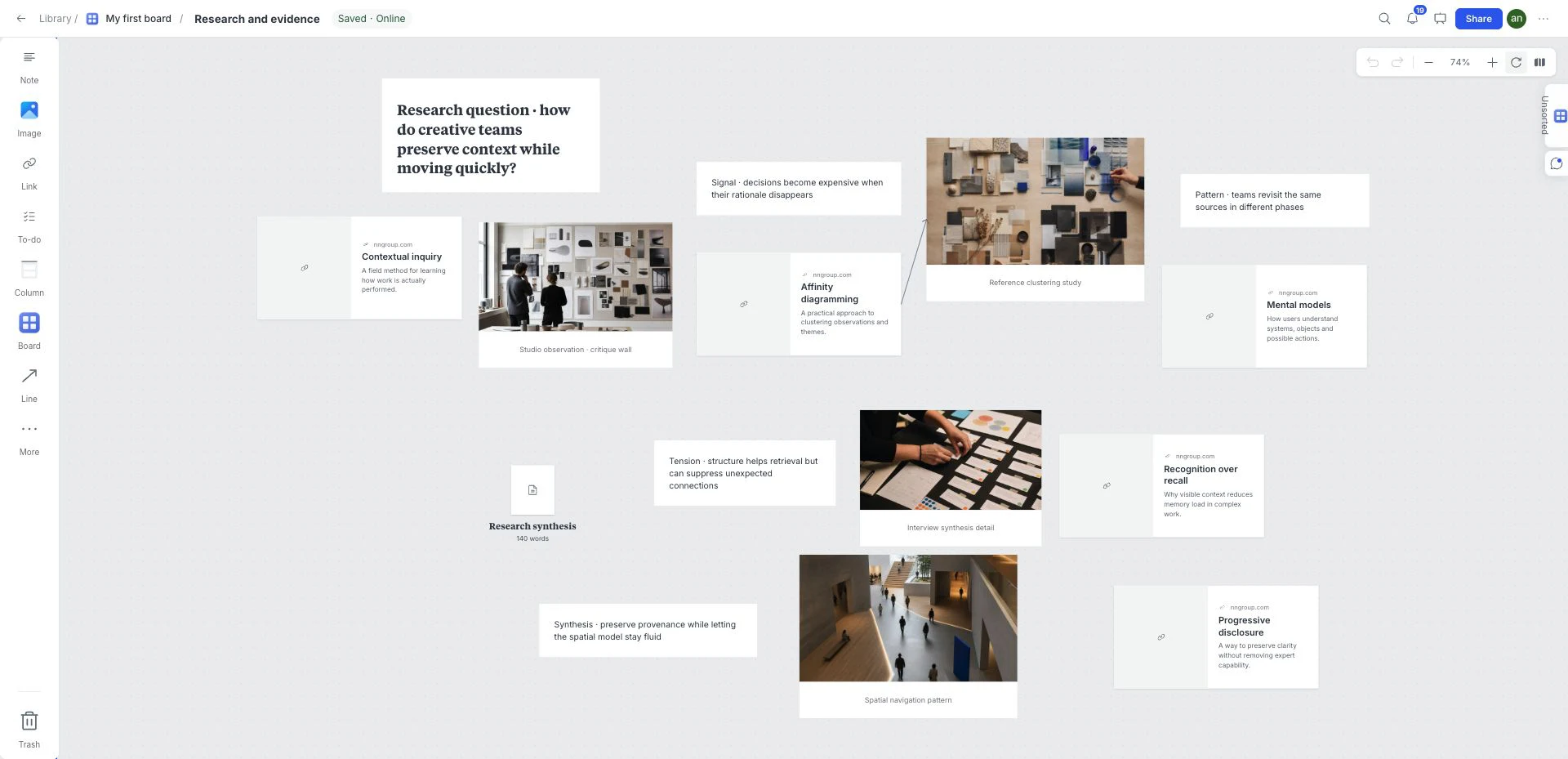
What is inside this visual research board template?
An evidence map and synthesis you can revisit. Sources remain beside observations so a finding can be checked rather than becoming an unexplained theme.
Sources
Keep URLs, images and files with enough source information to trace an observation later.
Observations
Write what you saw or heard before interpreting it. Retain counterexamples as well as repeated patterns.
Documents
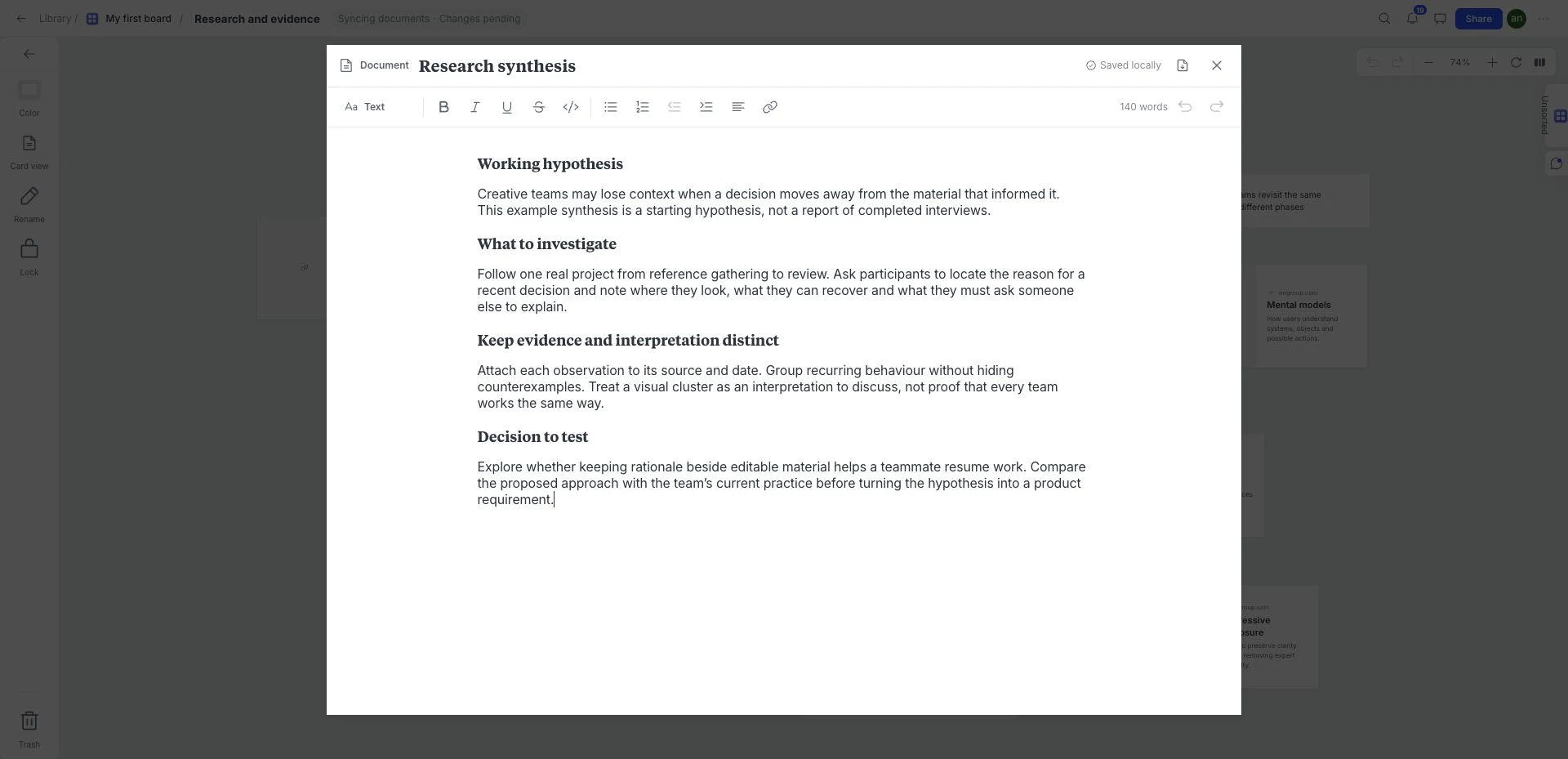
Use the synthesis document to distinguish evidence, a possible explanation and the next question.
Connections
Connect evidence to the finding it supports without implying that a visual link proves causation.
A brief to try with this layout
Research how customers choose handmade homeware. Collect sources, write observations separately from opinions, and summarize the patterns that should influence photography or product information.
Before you share: Can another person trace each finding to its evidence and see what remains uncertain?
Read the practical guideHow to use the visual research board template
- Open your workspace. Choose New board from the ⋯ menu to create an empty child board.
- In the new board’s ⋯ menu, choose Templates → Research. Keep or remove example content, then Apply.
- Drop in references, links, files, and notes directly on the canvas.
- Edit the board until every item reinforces one clear direction.
- Use review and presentation tools when the direction is ready to discuss.
What a strong visual research board looks like
- Keep the original URL or source note next to each observation.
- Group repeated behaviors while retaining contradictory evidence.
- Write findings, hypotheses and next actions separately in the synthesis document.
Who is this template for?
Researchers, designers and strategists turning collected evidence into decisions. It works as a starting point, not a locked deliverable, so the board can change with the project.
Compare all 12 templatesTemplates for the next part of the project
 Creative strategy
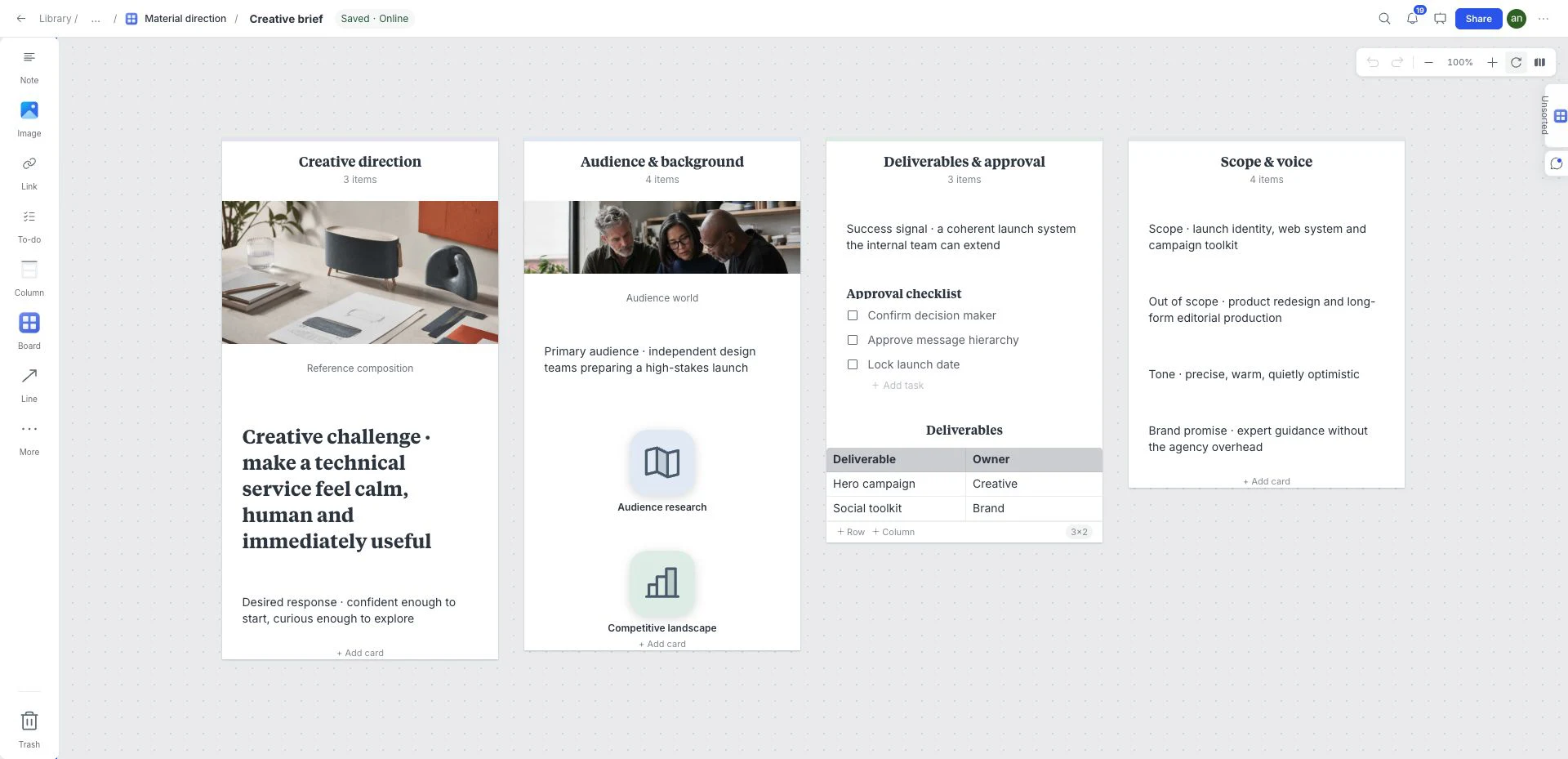
Creative Brief
Put the background, scope and visual references beside the questions a designer or collaborator needs answered before work begins.
 Campaign planning
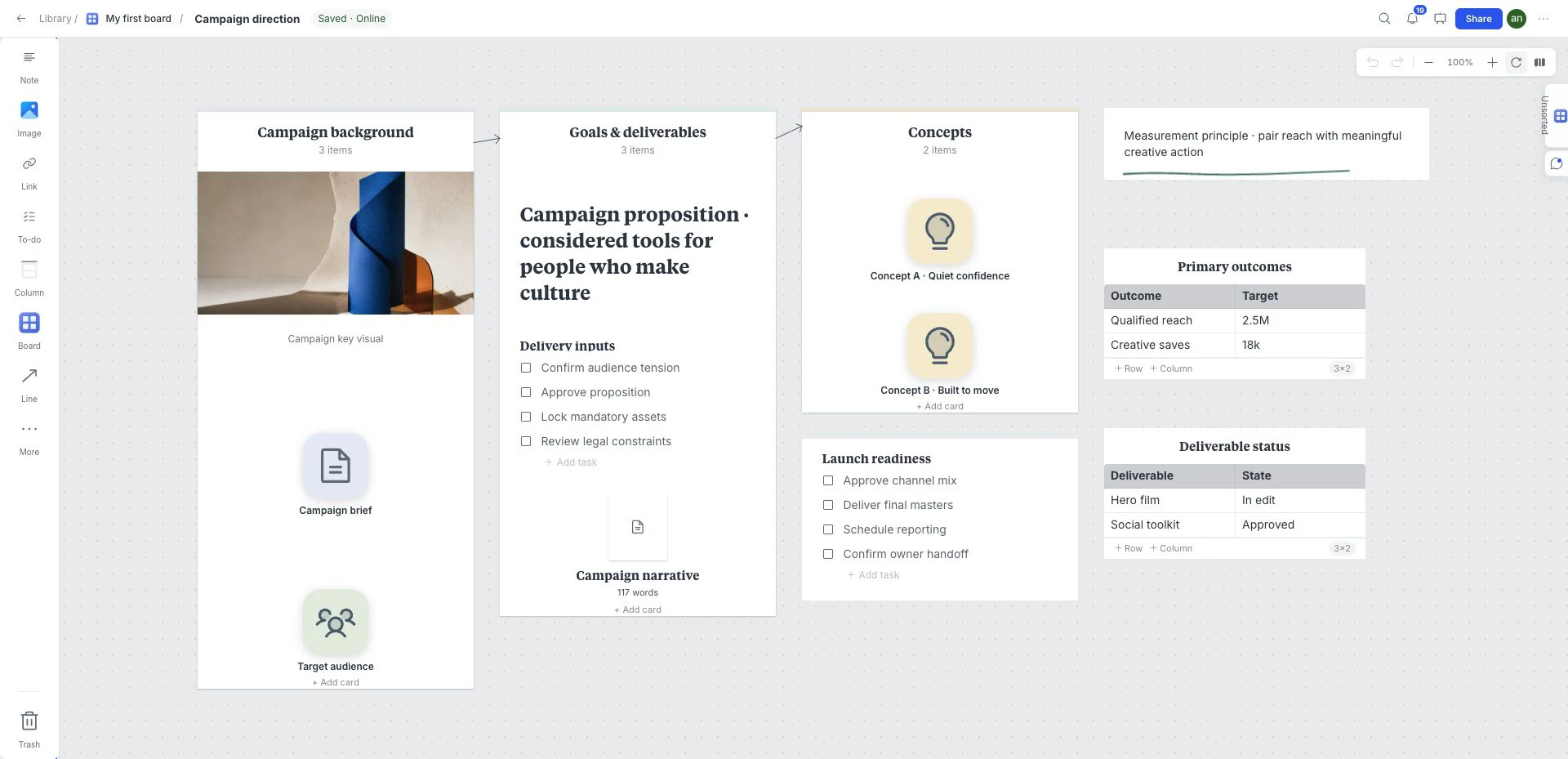
Product Launch & Campaign Plan
Plan a small product launch with goals, audience notes, visual references, deliverables and success metrics together. Start from Campaign Plan in the template library.
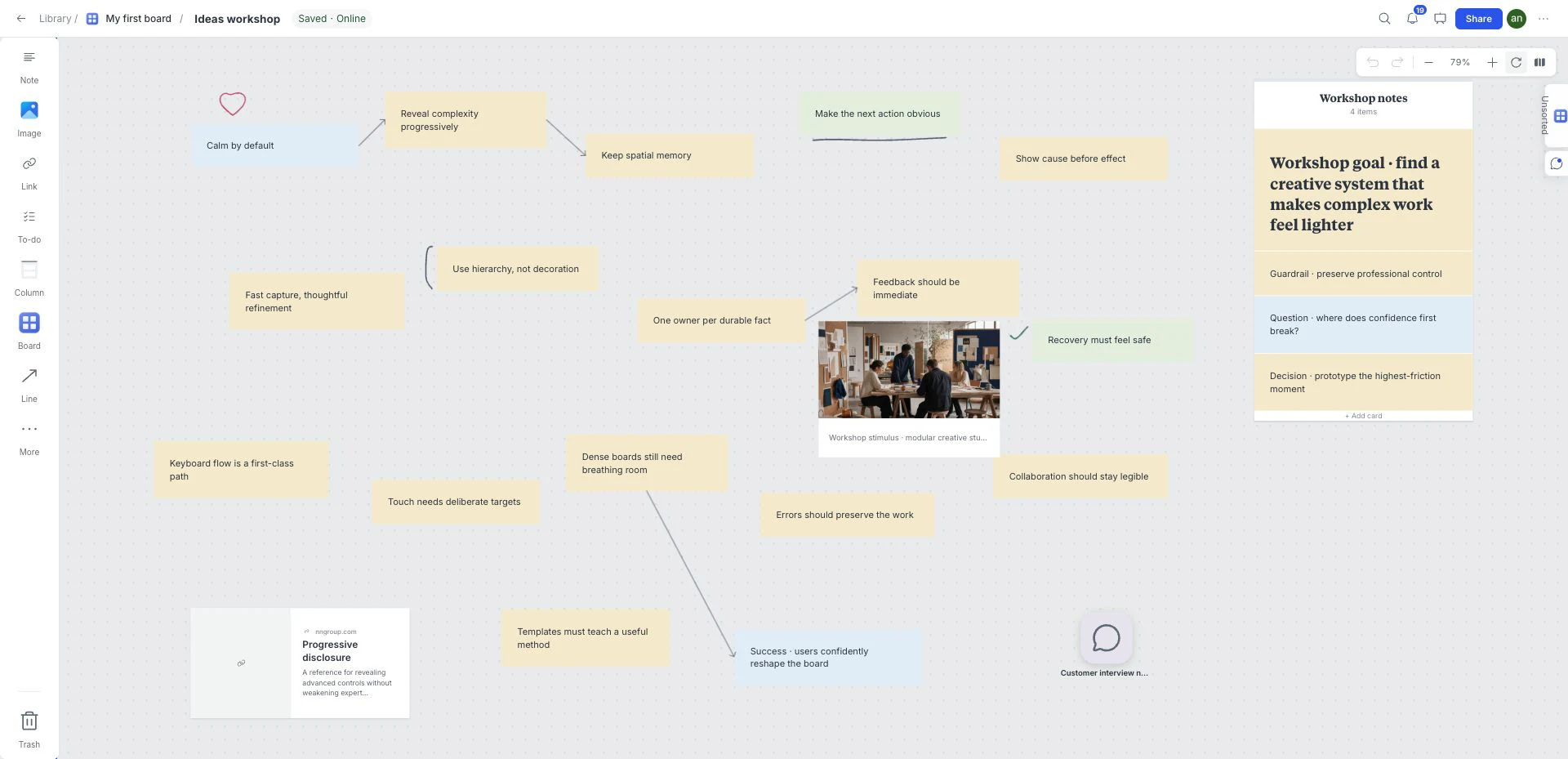 Ideas and workshops
Brainstorming
Start with a free-form field for ideas, notes and references. Connect useful relationships, then turn the strongest cluster into a direction to explore.
Frequently asked questions
Is the Visual Research Board template free?
Yes. This template is included in the current free workspace. Google sign-in is required to create and save a board; no credit card is needed. Paid subscriptions are not on sale.
Can I customize the Visual Research Board template?
Yes. Rename, remove, reorder, or extend the sections and add your own images, notes, links, files, colors, tasks, and sketches.
Where do I find this template in the board?
Create an empty child board using New board in the ⋯ menu. Open that child board’s ⋯ menu → Templates and choose Research. Select whether to keep example content before Apply. Templates cannot be applied to the workspace root or a nonempty board.
What should I check before sharing this visual research board?
Can another person trace each finding to its evidence and see what remains uncertain?